Lineage
The Gharana
Miyan Tansen, the celebrated disciple of the saint musician Swami Haridas, founded Senia Gharana some five centuries ago.
It was Baba who provided a quantum leap to the music of Senia Gharana. He introduced the Dhrupad-ang to Indian instrumental music and enhanced their technical quality and emotional appeal. The sarod achieved its status as a popular concert instrument in his hands. His innovations to the sitar gave it amazing versatility and added a new dimension to the artistry of his disciples Pt. Ravi Shankar and Pt. Nikhil Banerjee. The flute was introduced to the masses as a classical instrument and immortalized by his disciple, Pt. Pannalal Ghosh while the violin came to be accepted in the Hindustani classical idiom by his initiative.
After Baba's seminal contribution to Senia Gharana's evolution, the tradition became known as the Senia-Beenkar Gharana.
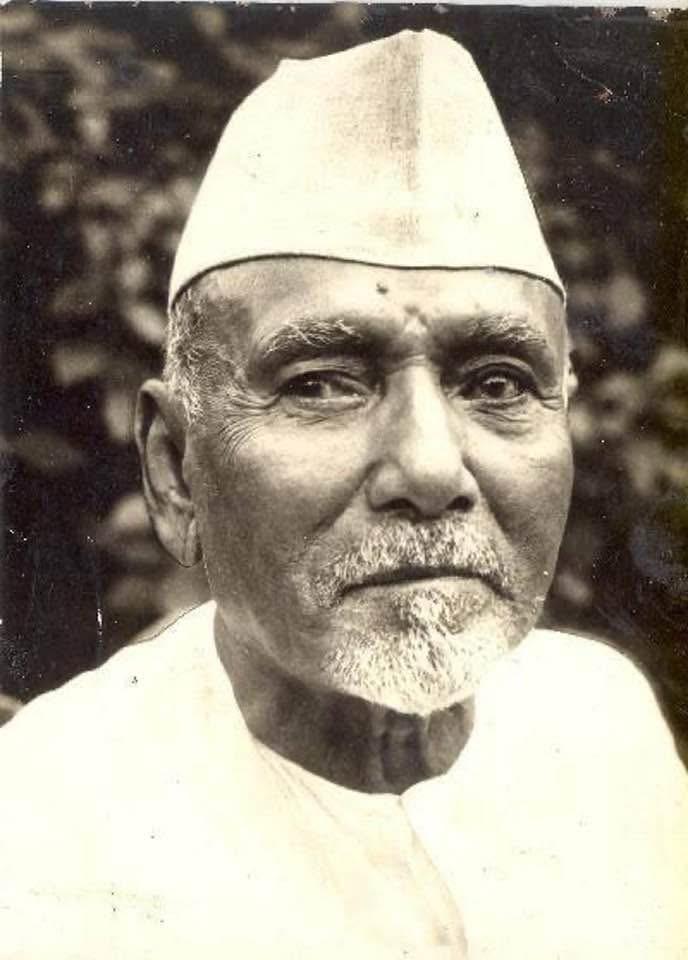
Padma Vibhushan Acharya Allauddin Khansaheb
Founder of the Maihar (Senia-Beenkar) Gharana
Padma Vibhushan Acharya Allauddin Khansaheb, Baba, was not only a musical genius but a teacher, composer, and conductor with outstanding mastery of over thirty instruments of the string, bow, wind and percussion groups.
Baba's passion for music led him to learn music from various Gurus till he became the disciple of Ustad Wazir Khansaheb of Senia Gharana, a direct descendant of Mian Tansen.
Baba spent over four decades of his life in Maihar, playing, teaching and sharing his divine gift of music. His disciples include a lineup of front-ranking instrumentalists of the 20th century. Each a world class musician and each the finest exponent of his/her instrument:
Distinguished Disciples
Ma Annapurna Devi – Surbahar, Ustad Ali Akbar Khan – Sarod, Pandit Ravi Shankar – Sitar, Pandit Jotin Bhattacharya – Sarod, Pandit Pannalal Ghosh – Flute, Pandit Nikhil Banerjee – Sitar, Pandit V.G. Jog – Violin.
What is more, Baba transformed some chamber or folk instruments into concert-worthy ones thus enhancing their image.
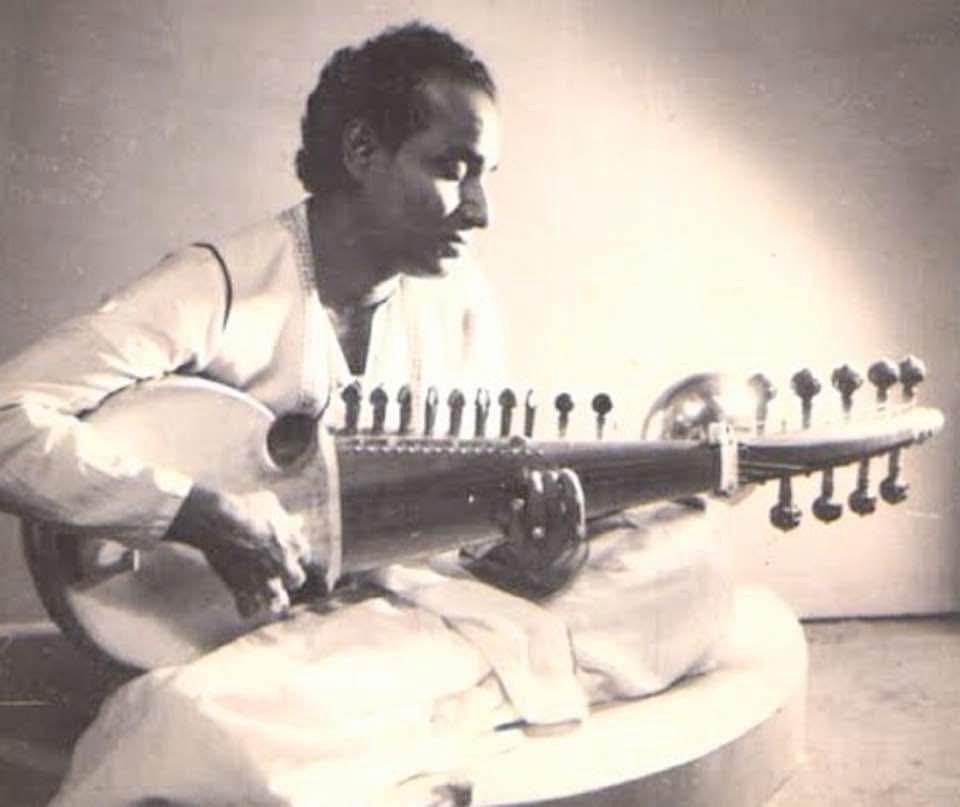
Pandit Jotin Bhattacharya
Custodian of the Senia Beenkar and Rababia Gharana
Pandit Jotin Bhattacharya (1st January 1926 – 22nd March 2016) was one of the foremost exponents of the Senia Beenkar and Rababia Gharana, and a distinguished disciple of Baba Ustad Allauddin Khan Sahib. After completing his studies in Philosophy at Banaras Hindu University, he devoted himself entirely to music, undergoing eight years of intensive training at Maihar (1949–1956). During this period, he also received invaluable guidance from Surbahar maestro Annapurna Devi.
Renowned as the “King of Bandishes,” Pandit Bhattacharya inherited an extraordinary repertoire of rare ragas and compositions from his guru. He was celebrated for his profound scholarship, impeccable musicianship, and mastery of complex rhythmic and melodic structures. Alongside preserving tradition, he enriched Hindustani classical music by composing more than forty original ragas.
His landmark HMV recording (1972) featured Raga Marwa and his own creation, Raga Sampurna Kanhra. He also authored the acclaimed biography Ustad Allauddin Khan and His Music (1979), preserving the life, teachings, and musical legacy of his guru for future generations.
A revered teacher, Pandit Bhattacharya shared his knowledge generously with disciples from India and abroad, leaving a lasting impact on generations of musicians. His disciple Arup Ratan Mukherjee has continued to honour his guru’s legacy by organizing concerts and baithaks in Delhi for over two decades.
Remembered for his uncompromising integrity, humility, and lifelong dedication to music, Pandit Jotin Bhattacharya remains one of the great custodians of the Maihar tradition and a towering figure in twentieth-century Hindustani classical music.
Pandit Amit Bhattacharya
Pandit Amit Bhattacharya embodies the paradigm of devotion, the singular Ganda Bandh disciple of the venerable Guru Ma Annapurna Devi, whose existential odyssey is a majestic ode to the transfigurative power of music. As he navigates the ethereal expanse of sound, the mundane matrices of artistry dissolve, revealing the luminous essence of Sadhana - a sublime symbiosis of fervent bhakti, unyielding tapas, and profound atmavicara, culminating in an apotheosis of the soul.